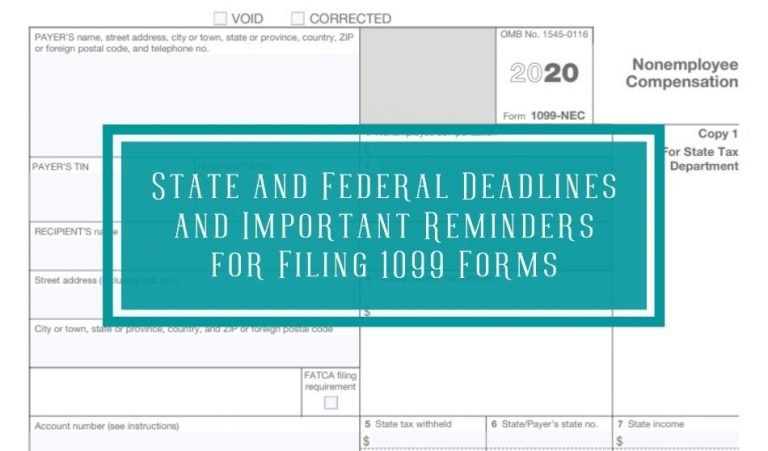
For many businesses and individuals, the thought of tax season brings a flurry of forms, and among the most crucial are the 1099 series. Understanding the Filing Deadlines and Distribution Procedures for 1099s isn't just about ticking a box; it's about safeguarding your business from penalties and maintaining good standing with the IRS and your payees. Get it right, and you're golden. Miss a step, and you could face unnecessary headaches and fines.
This isn't just a dry recitation of dates. We're going to break down everything you need to know, from deciphering different form deadlines to mastering the art of timely distribution, all while keeping your sanity intact. Consider this your go-to guide for navigating the complexities of 1099 season with confidence.
At a Glance: Your 1099 Deadlines & Distribution Checklist
Before we dive deep, here’s a quick roadmap to the critical actions and dates you need to keep in mind for tax year 2025 (forms due in 2026):
- Know Your Forms: Different 1099 types (NEC, MISC, INT, DIV, etc.) have varying deadlines.
- Two Key Deadlines: You have one deadline to furnish copies to recipients and another to file with the IRS.
- eFile Advantage: Electronic filing generally offers more generous deadlines compared to paper filing.
- Crucial Dates (for Tax Year 2025, due 2026):
- February 2, 2026: Most recipient copies and all 1099-NEC/W-2 filings (IRS paper/eFile).
- February 16, 2026: Some 1099-MISC recipient copies (specifically Boxes 8 or 10).
- March 2, 2026: Most other 1099 forms filed with the IRS via paper.
- March 31, 2026: Most other 1099 forms filed with the IRS via eFile.
- Weekend/Holiday Rule: If a deadline falls on a weekend or federal holiday, the due date shifts to the next business day.
- Distribution Methods: Mail (postmarked by deadline) or secure e-Delivery.
- Prepare Early: Collect W-9s from contractors/vendors before making payments.
- Extensions Exist: You can apply for a 30-day extension for IRS filing, but recipient copy extensions aren't automatic.
- Penalties are Real: Missing deadlines leads to escalating fines. File late rather than never.
Why 1099 Deadlines Matter More Than You Think
Imagine you're running a thriving business, managing a team of contractors, and relying on various services. Throughout the year, you’ve paid individuals and unincorporated businesses for their work. The IRS wants to know about those payments, and the 1099 forms are how you tell them. More importantly, these forms also inform your contractors and vendors about the income they received from you, which they need for their own tax returns.
Missing these crucial deadlines isn't just a minor administrative oversight. It triggers a cascade of potential issues:
- Penalties: The IRS assesses penalties for late filing or late distribution to recipients. These aren't static; they escalate based on how late you are.
- Recipient Frustration: Your contractors need their 1099s to file their taxes accurately and on time. Delays can cause them stress and lead to requests for corrections, creating more work for you.
- Audit Risk: Consistent non-compliance or errors can flag your business for increased scrutiny from the IRS.
- Reputation Damage: Failing to meet obligations reflects poorly on your business, potentially harming relationships with valuable contractors and vendors.
Simply put, timely and accurate 1099 filing is a cornerstone of responsible business financial management.
The Two Critical Dates: Recipient vs. IRS
When we talk about 1099 deadlines, it's essential to understand that there are usually two distinct deadlines for each form:
- Recipient Copy Due Date: This is the date by which you, the payer, must furnish a copy of the 1099 form to the individual or business (the recipient) who received the income. They need this information to accurately report their earnings to the IRS.
- IRS Filing Due Date: This is the date by which you must submit the official 1099 forms to the Internal Revenue Service. The IRS uses this information to cross-reference reported income and ensure compliance.
While these dates often overlap for some forms, they can also differ significantly, especially when considering paper versus electronic filing methods.
Decoding the Calendar: Key 1099 Deadlines for Tax Year 2025 (Due in 2026)
The IRS moves with a consistent calendar, but exceptions and nuances exist. Let’s lay out the key deadlines for the tax year 2025, with forms due in 2026. Remember, if any of these dates fall on a weekend or federal holiday, the deadline automatically shifts to the next business day.
The Swift Turnaround: Form 1099-NEC and Form W-2
These forms are critical for reporting nonemployee compensation and employee wages, respectively, and have the earliest, most unified deadlines.
- Recipient Copy Due Date: February 2, 2026
- IRS Paper Filing Due Date: February 2, 2026
- IRS eFile Due Date: February 2, 2026
For Form 1099-NEC (Nonemployee Compensation), whether you mail it or e-file it, to your recipients or the IRS, the deadline is the same. This tight turnaround emphasizes the importance of year-round data collection. The Form W-2, while not a 1099, follows the same strict schedule.
The Nuanced One: Form 1099-MISC
Form 1099-MISC (Miscellaneous Information) used to be the primary form for contractors, but now primarily reports other types of income. Its deadlines are slightly more complex, depending on the specific box where the income is reported.
- Recipient Copy Due Date (Non Box 8 or 10 income, e.g., rents, royalties): February 2, 2026
- Recipient Copy Due Date (Box 8: Substitute Payments in Lieu of Dividends or Interest; Box 10: Gross Proceeds Paid to an Attorney): February 16, 2026
- IRS Paper Filing Due Date: March 2, 2026
- IRS eFile Due Date: March 31, 2026
Notice the differing deadlines for recipient copies based on the payment type. This requires careful attention to detail when completing your 1099-MISC forms.
The Common Crowd: Forms 1099-B, 1099-C, 1099-DIV, 1099-G, 1099-INT, 1099-K, 1099-OID, 1099-PATR, 1099-R, 1099-S, 1098, 1098-MA, 1098-T
This large group covers various income types, from capital gains to interest, dividends, and proceeds from real estate transactions. Many financial institutions and government entities commonly file these.
- Recipient Copy Due Date: February 2, 2026
- IRS Paper Filing Due Date: March 2, 2026
- IRS eFile Due Date: March 31, 2026
For these forms, you generally have a little more breathing room between sending copies to recipients and filing with the IRS, especially if you opt for electronic filing.
Summary Table: Key 1099 Deadlines (Tax Year 2025, Due 2026)
| Form Type | Recipient Copy Due | IRS Paper Filing Due | IRS eFile Due |
| :------------------------------------------ | :------------------- | :------------------- | :------------------- |
| 1099-NEC & W-2 | Feb 2, 2026 | Feb 2, 2026 | Feb 2, 2026 |
| 1099-MISC | | | |
| (Non Box 8/10 income) | Feb 2, 2026 | Mar 2, 2026 | Mar 31, 2026 |
| (Box 8 or 10 income) | Feb 16, 2026 | Mar 2, 2026 | Mar 31, 2026 |
| 1099-B, C, DIV, G, INT, K, OID, PATR, R, S, 1098, 1098-MA, 1098-T | Feb 2, 2026 | Mar 2, 2026 | Mar 31, 2026 |
Note: Dates are for Tax Year 2025 forms, due in 2026. If a date falls on a weekend or federal holiday, the deadline shifts to the next business day.
Paper vs. Digital: Your Filing Options and Their Deadlines
When it comes to submitting 1099s to the IRS, you generally have two choices: paper or electronic filing (eFile). The IRS strongly encourages eFile, and for good reason—it often comes with significant advantages.
Paper Filing
This method involves printing out the official red-ink IRS forms (or using pre-printed forms from a tax software or office supply store) and mailing them directly to the IRS.
- Pros: Familiarity for some; no special software required beyond printing.
- Cons: Earlier deadlines (typically March 2 for most 1099s, but February 2 for 1099-NEC); higher chance of errors (manual data entry, illegible handwriting); slower processing; no confirmation of receipt beyond mail tracking; generally not allowed if you file more than 10 forms of any type (down from 250 forms in prior years).
- Important: You cannot print out forms from tax software onto plain white paper and send them to the IRS. The IRS requires specific "red-ink" scannable forms (Copy A).
Electronic Filing (eFile)
e-Filing involves using IRS-approved software or a service provider to submit your 1099s directly to the IRS electronically.
- Pros: Later deadlines (typically March 31 for most 1099s, but February 2 for 1099-NEC); reduced error rates (software validates data); immediate confirmation of receipt; faster processing; mandatory if you're filing 10 or more information returns of any type.
- Cons: Requires using IRS-approved software or a third-party service; initial setup might take a little time.
Given the more generous deadlines, reduced error likelihood, and the increasing mandate for electronic filing, choosing to eFile is almost always the smarter move for your business. It streamlines the process and gives you more breathing room.
How to Distribute 1099s to Recipients
Once your 1099 forms are ready, getting them into the hands of your recipients is the next critical step. Just like filing with the IRS, there are specific rules for distribution.
Mail Delivery
This is the traditional method. You print out the recipient's copy (Copy B) and mail it to their last known address.
- Requirement: The envelope must be postmarked by the due date. Sending it on the due date via certified mail is a good practice for proof of mailing.
- Best Practice: Ensure your records of recipient addresses are always up-to-date. Undeliverable mail can cause delays and potential penalties.
Electronic Delivery (e-Delivery)
Providing 1099s electronically can be convenient and cost-effective, but it comes with strict IRS rules to protect recipient privacy and ensure informed consent.
- Recipient Consent: You must obtain affirmative consent from the recipient to receive their 1099 electronically. This consent must be given in a way that reasonably demonstrates they can access the statement in the electronic format you'll be using.
- Disclosure Statement: Before they consent, you must provide a clear disclosure statement outlining:
- The option to receive a paper statement.
- Their right to withdraw consent and how to do so.
- How to obtain a paper copy after consenting.
- The hardware and software requirements needed to access the electronic statement.
- The period for which the consent is valid.
- How you'll notify them that the statement is available.
- Security: The electronic delivery system must protect the confidentiality of the information and be readily accessible to the recipient for a reasonable period (typically until October 15 of the year following the calendar year to which the statement relates).
While e-Delivery offers convenience, the need for explicit, informed consent and robust security means it's often best handled through specialized payroll or accounting software designed for this purpose.
Navigating Extensions: When You Need More Time
Life happens, and sometimes, despite your best efforts, you might need a little extra time to comply with 1099 deadlines. The IRS offers options, but they aren't all created equal.
Automatic 30-Day Extension for IRS Filing
For most 1099 forms (including 1099-NEC), you can apply for an automatic 30-day extension to file with the IRS. You do this by filing Form 8809, Application for Extension of Time To File Information Returns, by the original due date of the forms.
- Key Point: This extension is automatic for filing with the IRS. You don't need to provide a reason, and it's almost always granted if filed correctly and on time.
Extensions for Providing Recipient Copies
This is where it gets tricky. Extensions for furnishing recipient copies are generally not automatic. You typically need to write a letter to the IRS explaining your need for an extension. The IRS will only grant these extensions in specific, hardship circumstances, and they require a compelling reason.
- Best Advice: Don't count on getting an extension for recipient copies. Plan to meet those deadlines regardless. If you absolutely must, contact the IRS for guidance.
The Cost of Delay: Understanding 1099 Penalties
The IRS means business when it comes to information reporting. Penalties for failing to file or furnish correct information returns by the due date can be substantial and increase with the length of the delay.
Here's a general overview of how penalties escalate (note: these figures are subject to change by the IRS annually):
- Within 30 Days Late: The lowest penalty tier, often around $60 per form.
- More Than 30 Days Late, But Before August 1: The penalty increases, often around $120 per form.
- On or After August 1 (or Not Filed): The highest penalty tier, often around $310 per form.
- Intentional Disregard: If the IRS determines you intentionally disregarded the filing requirements, the penalty is significantly higher—often $630 per form, with no maximum. This applies to both failure to file and failure to furnish a correct recipient statement.
These penalties apply per form. If you fail to file 50 forms, those penalties multiply quickly. This underscores why proactive preparation and timely filing are paramount.
Proactive Preparation: Your Best Defense Against Missed Deadlines
Avoiding the stress and cost of late 1099s boils down to one simple strategy: prepare early. Don't wait until January to start gathering your information.
- Collect W-9s from Day One: The single most important step. Anytime you engage a new contractor or vendor who will receive payments from you, obtain a completed W-9 form before you make their first payment. This form provides all the essential information needed for a 1099: name, address, and Taxpayer Identification Number (TIN). If you neglect this, you might find yourself scrambling in January trying to track down a vendor who has moved on or is unresponsive. You can also learn how to generate a 1099 with accurate W-9 data.
- Maintain Accurate Records: Keep meticulous records of all payments made to contractors and vendors throughout the year. Use accounting software to categorize payments correctly, so you can easily pull the necessary data at year-end.
- Verify TINs: Periodically verify the TINs (Social Security Numbers or Employer Identification Numbers) provided on W-9s using the IRS’s online TIN Matching program. Incorrect TINs can lead to "B-notices" from the IRS, which require additional steps to resolve.
- Set Up Reminders: Mark your calendar for key 1099 deadlines well in advance. Consider using automated reminders in your accounting software or a separate calendar system.
- Choose Your Filing Method: Decide early whether you'll paper file or eFile. If e-filing, ensure your software or service provider is IRS-approved and you understand their process.
Common Questions About 1099 Deadlines
What happens if a deadline falls on a weekend or federal holiday?
As a rule, if any 1099 deadline falls on a Saturday, Sunday, or legal holiday, the due date is automatically extended to the next business day. This applies to both recipient distribution and IRS filing deadlines. The dates provided in this guide already account for federal holidays in early 2026.
Can I get an extension for giving recipients their copies?
Generally, no. Extensions for providing recipient copies are rarely granted and require a letter demonstrating severe hardship. Unlike filing with the IRS, there's no automatic extension for recipients. Always plan to meet the recipient copy deadline.
What if I sent a 1099 to the wrong address?
If a 1099 is returned as undeliverable, you must make a reasonable effort to obtain the correct address and send it again. If, after reasonable effort, you still cannot get a correct address, you are generally relieved of the obligation to send it. However, you should document your efforts. It's much easier to prevent this by obtaining accurate W-9s upfront and maintaining updated contact information throughout the year.
Do I need to file a 1099 for every payment?
Not necessarily. There are specific thresholds for various 1099 forms. For instance, for Form 1099-NEC, you generally only need to file if you paid a contractor $600 or more in nonemployee compensation during the calendar year. For other forms like 1099-INT, the threshold can be as low as $10. Always consult the specific form instructions or your tax advisor to confirm thresholds.
What about state 1099 filing deadlines?
Many states also require copies of 1099 forms, and their deadlines can sometimes differ from federal deadlines. Some states participate in the IRS's Combined Federal/State Filing (CF/SF) Program, which means if you e-file your forms with the IRS, they automatically forward the data to participating states. However, not all states participate, and some require direct filing or have unique forms. Always check your specific state's requirements.
Beyond the Deadline: What to Do If You're Late
If you find yourself past a 1099 deadline, don't panic, but don't delay further.
- File/Furnish Immediately: The absolute best thing you can do is to file and furnish the forms as soon as possible. The IRS penalty structure is tiered, meaning the sooner you correct the oversight, the lower the penalty will be.
- Document Your Efforts: Keep detailed records of when you filed, any communication with recipients, and any steps taken to mitigate the delay.
- Consider Reasonable Cause: In some very limited circumstances, you might be able to argue "reasonable cause" for the delay and have penalties abated. This typically requires significant events beyond your control (e.g., natural disaster, serious illness). This is difficult to prove and usually requires professional assistance.
- Consult a Professional: If you're significantly late, facing large numbers of forms, or unsure of the best course of action, consult with a tax professional or accountant. They can help you navigate the penalties and ensure proper compliance moving forward.
Your Next Steps to Stress-Free 1099 Filing
Mastering the Filing Deadlines and Distribution Procedures for 1099s is a critical skill for any business owner or financial manager. It’s not about memorizing dates, but about building a robust, proactive system.
Here's your actionable checklist to ensure a smooth 1099 season next year:
- Implement a W-9 Policy: Make collecting a W-9 form a mandatory part of onboarding any new contractor or vendor. No W-9, no payment.
- Review Your Data Regularly: Periodically check your vendor information and payment records throughout the year for accuracy.
- Choose Your Software Wisely: Invest in reliable accounting or payroll software that simplifies 1099 tracking, generation, and e-filing.
- Mark Your Calendar: Add reminders for critical 1099 dates (especially the recipient copy deadlines) for the next tax year.
- Stay Informed: Tax laws and regulations can change. Keep an eye on IRS announcements or subscribe to tax news from trusted sources.
By making these proactive steps a routine part of your business operations, you can transform 1099 season from a frantic rush into a manageable, stress-free task. Your business, your recipients, and the IRS will thank you for it.